
War is another TV show
It's not interesting to distant observers and turns everyone, including its participants, into spectators

I got very angry in winter 2023. The number of missiles and drones over Kyiv kept increasing, but the speed of support from confirmed partners was too slow and inconsistent to keep up with the russian pace. Living without electricity and spending nights in my bathroom felt like a safari: russian hunters used all their weapons and torturing tactics against residential areas, pushing each of our breaths to the limits of our bravery and resilience, but the world chose to watch with delayed preoccupation from the comfort of their living rooms instead of acting.
Or rather, not watch. The walls of my apartment survived those cold and scary nights in 2023, but so did the walls the outer world built around us. The front pages of leading newspapers had shifted to the Middle East since October 7; my fundraising attempts on Instagram got zero clicks, and my nation’s bravery started to elicit bitter, helpless, passive sympathy instead of proactive engagement.
My anger was crying into the void: as dark as my apartment, and as deaf as trying to convince someone “out of politics” to help me before I was crushed by the grand chessboard.
Not much changed in the triangle between me, them, and the apolitically bystanding world by June 2026. The length of russian invasion, proudly announced as “we’ll conquer Kyiv in three days,” officially exceeded the length of WWI. New York Times published the news, while other news outlets were busy reporting the consequences of Trump’s war in Iran.
Today, russians have more drones and missiles—in number and variety—preparing the new massive strike as I write these words. My nation is still pushing the limits of bravery and resilience, doing the best we can; even out of breath.
Three years changed me, though: once the biweekly attack is over, I feel too tired of engaging with the horrors of my own life. Tired of realizing what it pushes me to go through. Tired of paying attention to my breath.
I got used to watching my reality through Instagram stories I share with the world that barely cares.
This war has lasted too long, so my reality has entered the race for attention against other conflicts, Hollywood gossip, Dua Lipa's and Taylor Swift’s weddings, and the art of a deal news-hijacking by Trump.
And we lose that engagement war to all of them, one battle after another. Just like a Netflix show with a great pilot and a promising couple of seasons that suffers from monotonous script loops afterwards.
Most of us meet war in TV shows, Hollywood blockbusters, or social media clips. Even the highest-profile politicians fall into that trap—including JD Vance, who told Zelensky he knows what’s going on in Ukraine from Insta stories.
No wonder we project cinematic tropes onto events we have no clue about in real life.
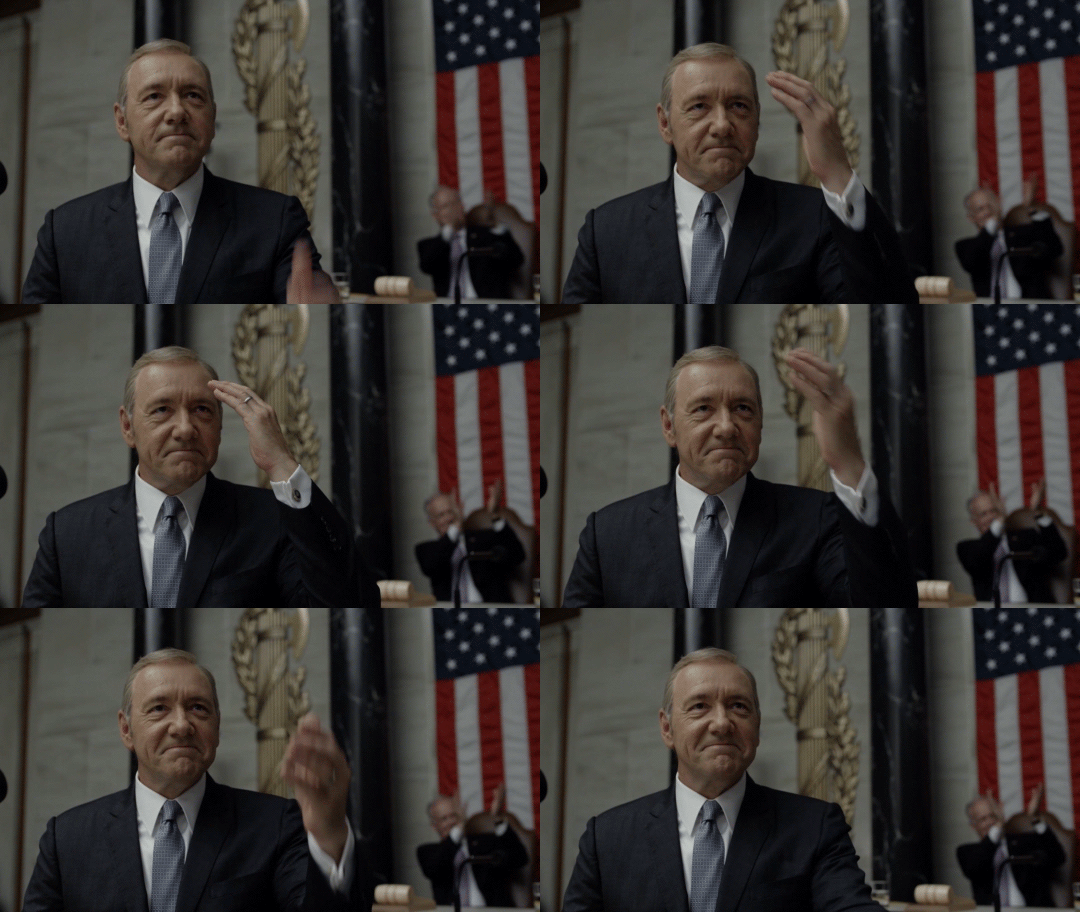
But the binge-watching Netflix model took that desensitized and mediated by social media digital war reality one step further. House of Cards trained us to read everything as content: escalating to keep us engaged, or stagnating to signal a lack of talent. It gave us the power to turn off whatever isn’t entertaining enough; to stop the bleeding by changing the channel.
And the war in Ukraine, in its fifth year, has become not entertaining enough.
Watching this war as a TV show, the first days of Ukrainian resistance make a marvelous pilot: a heroic leader of a brave nation, a unique sense of belonging, a global unity on shared values, and hope of a highly engaging series with a beautiful ending ahead. The first season was promising; the critics were generous with praise—but the longer “actors” are stuck in their positions and the “bad guys” keep reappearing in new seasons with no “character development,” the more boring watching a war as a TV show becomes.
Russian invasion plot evidently stagnates: Putin denies being a worse or a better guy, so does Zelensky—and other stories inevitably get into the prime time: hostages, fallen regimes, naval blockades, and the unbelievable things Trump has just said look more interesting in comparison.
Our digital habits bend our reality. We got trained to press the fast-forward button until something promising emerges: the next massive, shocking attack or a major counteroffensive, depending on our tastes and war stakes.
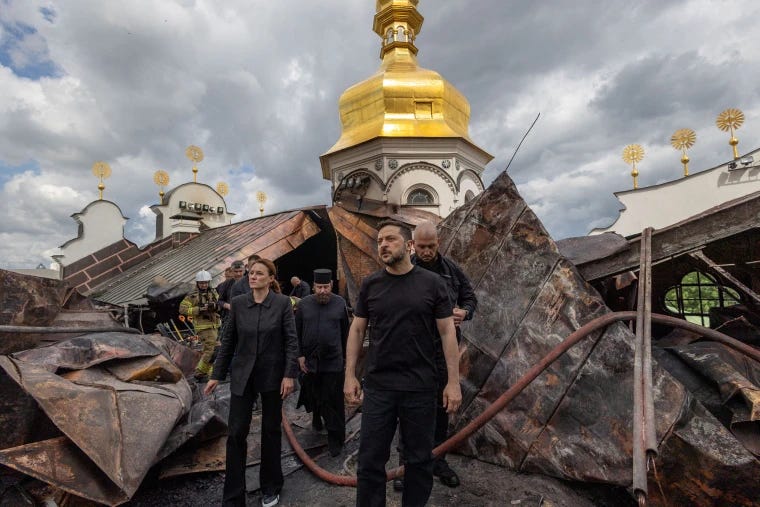
Only Kyiv residents don’t have a remote to switch off a massive attack on their city. So we go through it step by step: starting as spectators who read messages in Telegram, ending as participants with first-hand experience in a media spectacle, and back to spectators to detach from our reality.
Each episode of the Ukrainian war usually starts relatively small: something like a notice that there are 170 drones in the sky, with a forecast of around 800 drones tonight, mixed with different types of missiles.
Just like a weather forecast, but about the probability of a massive attack tonight based on the activity of russian aviation.
Getting ready for the night, I pack my backpack and try to make myself useful: going out, walking around the city center, taking notes and photos of Khreschatyk—what if it’s the last time I see my favorite streets? Mountains by Hans Zimmer measures every 1.25 seconds for my footsteps; most likely, each beat also symbolizes each new drone launched from russia as I walk.
Around ten minutes later, the first two drones reach the city—socials inform that the suburbs have already heard explosions. I hear nothing yet. There is no running and hiding in the city center either: everyone knows it’s just a preparation for the main act of russian roulette.
No need to hurry. City bikes drift on the boulevard; evaluators make their business; the National Guard gently stops at the semaphore, blinding me with blue lights.
We all just want to live the illusion of the casual, peaceful evening tonight a bit longer.
When I get home and still nothing dramatic happens, I force myself into the shelter. Caring about my safety is so non-engaging at this point. Packing the meds and things to sleep in silence, walking to the parking lot, lying there as a lonely wolf before the “show” begins. I do it as a spectator: coming earlier than the first explosion to choose the best seat in the movie theater, carefully following my reality via Telegram messages, getting bored from watching distracting ads for too long.
If I fail to get seated in the safest place possible, my suspense rises. How close will the explosion sound? Will I lose my windows this time? Or the entire apartment? Will this parking lot withstand a new missile they are testing on us? Will I die immediately or suffer from injuries for the rest of my life? Is there anyone nearby? Do these people know how to bandage my wounds in case I get hit?
Tasting endless possibilities is always entertaining—but with the first explosion, I no longer have time to think. I become a participant; as close to reality as I am capable of at this point.
The missiles are always sudden, and their explosions always come out of nowhere. They don’t warn before arriving to take a life and disappear. They don’t make a spectacle of themselves—they are factual, in all their ugliness and amorality.
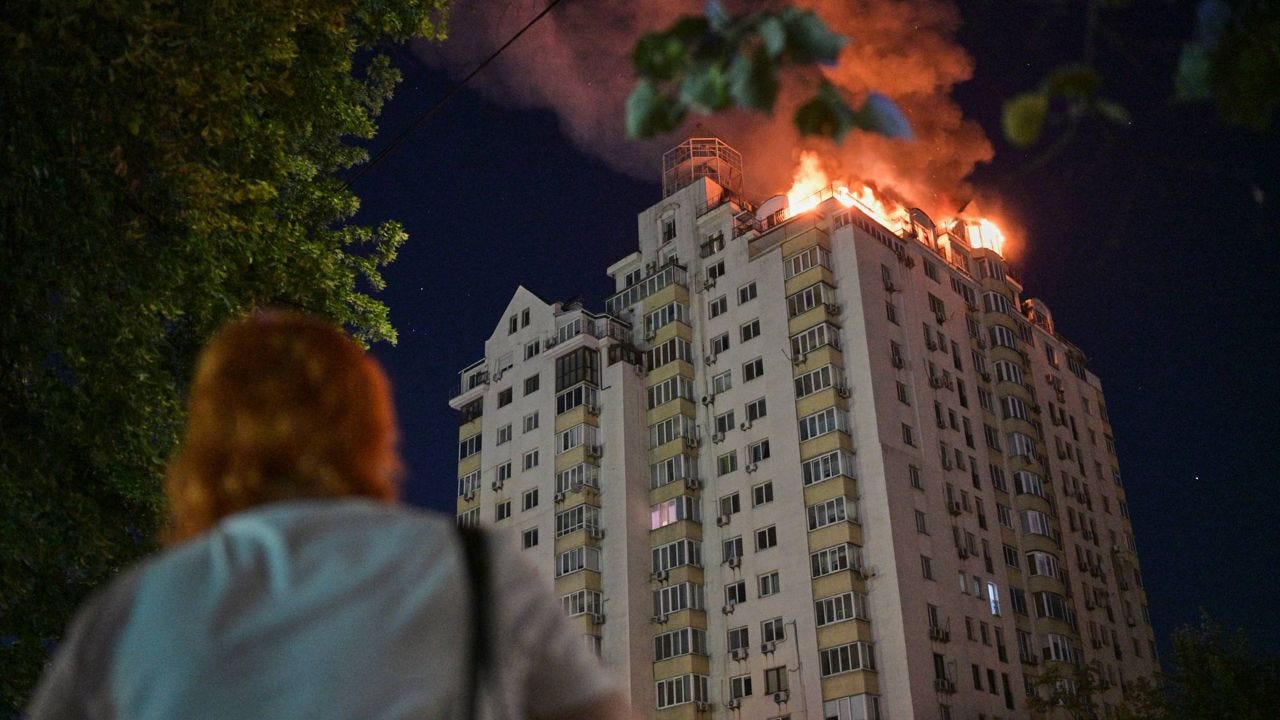
When the first explosion is over, waiting for a new one is always hard. The pause can last for seconds or days, fueling non-stop anxiety, deceiving my nervous system into sleep.
Last month, the loudest and scariest missiles mostly came in waves: two, then two, then one, then two—before reaching something like 15, or 20, or even more.
Trapped in the shelter, I count them until this is over: one explosion, two explosions, three explosions… Between the fifth and sixth one, I take back my lenses, as everything sounds closer, deeper, louder. Something hits really close; but there is nowhere to run. Around the tenth explosion, I realize the extent of the destruction and want it to stop.
As if it follows my orders, silence finally comes—in the sky and my messengers. I open Threads to read real people; with friends, it’s already a sort of silent pact that everyone will say “I’m fine and alive” right after the explosions because it’s hard to tell more. We’ll check in with each other in the morning.
The nights would be so much easier if we just had enough defense against the worst missiles. With the drones, it’s not that scary: they warn of themselves with a choir of boring and awful, one-note sounds, disrupted by frequent, sharp, and somewhat hysterical shots from our defenders.
They silence the drones, and I desperately want to sleep (in my contacts and far away from the windows, just in case). So before the next announcement, I go back to my apartment.
The second I fall asleep, the new explosion wakes me up.
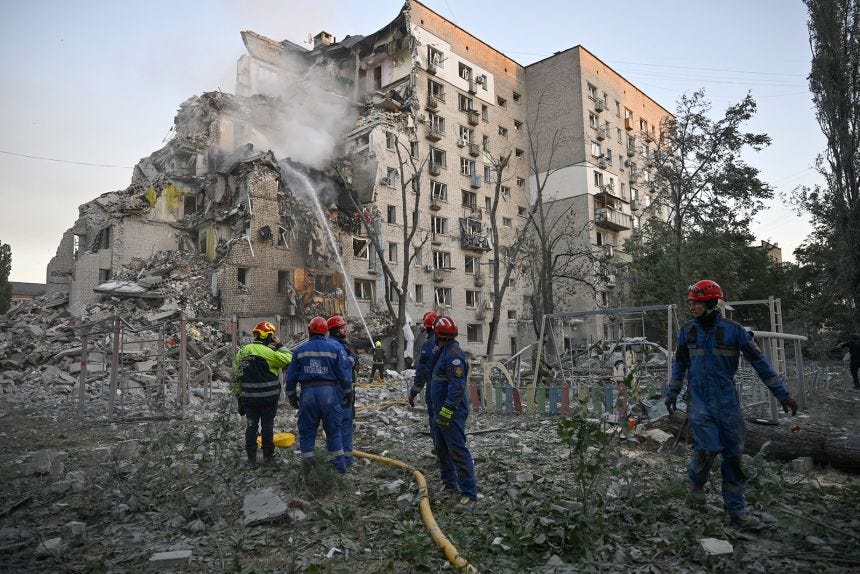
Lately, russia became capable of launching several waves with 15 missiles each. Caught off guard, I have no time to run to a parking lot and hide in my bathroom. It accompanies everything in its twisted way: the stretch ceiling inhales deeply before and after each explosion, even if the sound is distant. At times, it shakes from an explosion I don’t hear—as if my bathroom mourns each ruin in the city, no matter how distant it feels from a human perspective.
Beyond explosions, water pipes flash loudly, triggered by nervous neighbors. Sometimes I even feel vibrations in my bed (most likely, it’s my illusion). These sounds are also scary—reminding me of the first new sounds I heard in this war: first drone, first cruise missile, first ballistic missile, first hypersonic missile, first rattle of my windows—accompanied by pictures of the destruction they brought.
By the time the first group in the new missile wave hits the city, I’m already praying: my body shakes with my ceiling, torn by exhaustion, fear, and anger. My threshold for standing it all gets higher year after year in this war—but it always cracks the same way.
And after that, I don’t remember how the attack ends. I no longer care.
I detach from the horror, danger, and obsession with destruction that war brings in a spectator chair. I look at it as a Netflix show or a distant dream.
Because that’s the only way to stand in front of it. Otherwise, it’ll constantly rattle me to the core—forcing me to remember I’m all alone, without proper protection, and with no guarantees that I’ll hear the air siren clear alive.
I could read 200 books written by you.