
Keep it good, not loud
On what the attention economy costs a creator, and what it cannot touch

I avoided TikTok for the longest; and when I finally joined, my experience was marvellous.
I posted my best piano videos, and my feed was 100% about pianos in return: mesmerizing performances, rising talents doing lives, tips and tricks on how to play a crazy passage in Beethoven. I even had a TikTok ritual to kick off my piano session—a couple of videos to get inspired and learn something new from a random tutorial.
But one Saturday afternoon, I was lying on a couch and scrolling my socials to chill.
And I opened TikTok.
And its feed has never been the same.
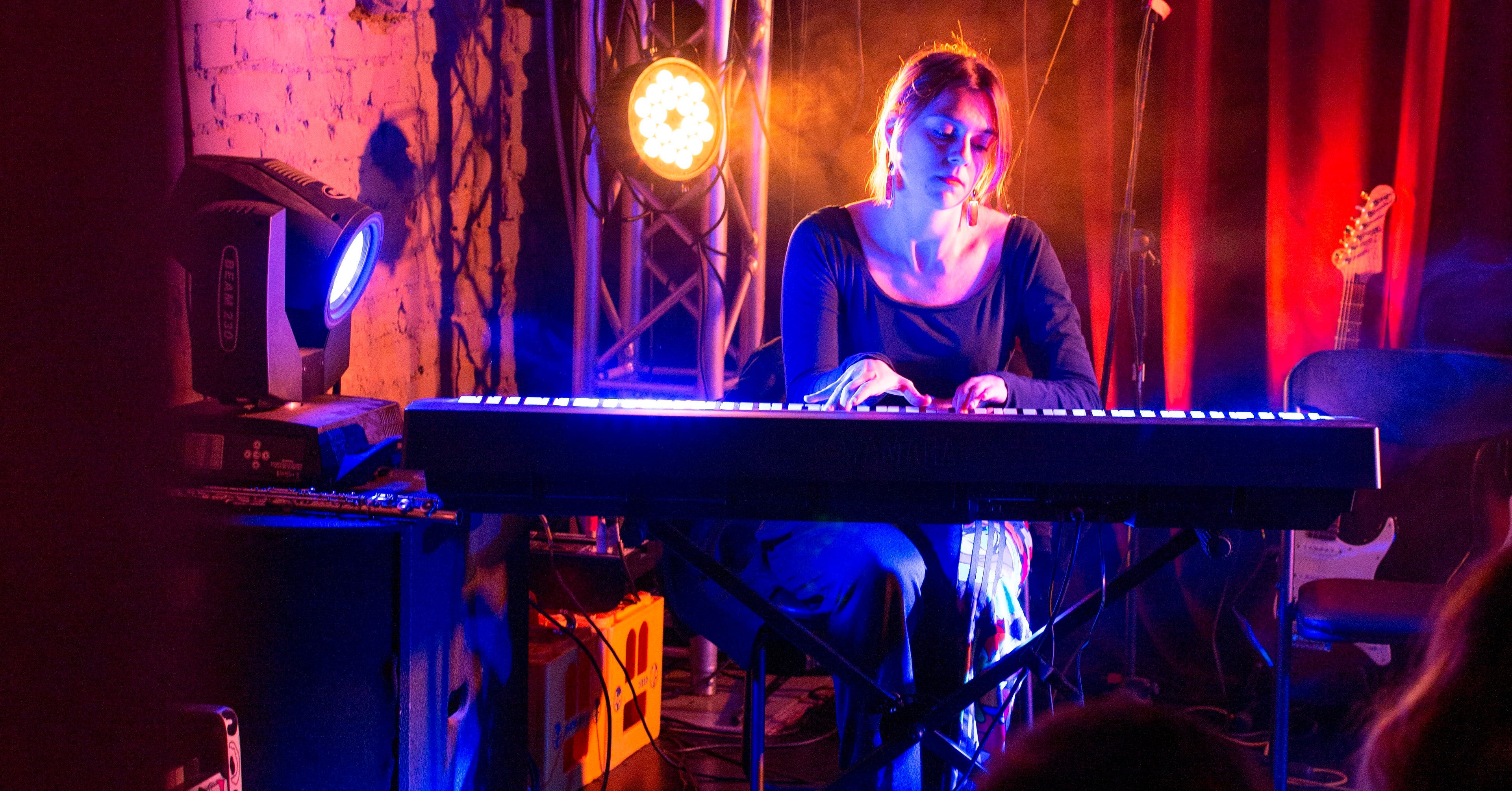
The days when my TikTok was about posting and watching piano are long gone. Now, it helps me procrastinate by showing political standup comedy, Eurovision reaction videos, Oscars ceremony compilations, and fun sketches on avoidants, music scandals, and the resilience of Ukrainians.
Though the algorithm clearly deciphered my interests in power, spectacle, culture, and public psychology, it ridiculed them all into nonsense.
The nature of the game we played changed: in one day, it stopped giving me anything to digest and think, but lots to chew and laugh. And it happened so abruptly and invisibly that I didn’t even notice that something went wrong.
Is there a way back?
Impossible is nothing. But reverting to the old times requires significant effort and self-awareness. To dodge the TikTok algorithm, I need to design an entire TikTok detox system: set goals, revise habits, train myself to scroll away “junk”, plan on consuming “healthily,” and mark “unhealthy” videos non-stop every time the black-box TikTok algorithm tries to hijack my tastes.
(Most likely, I also need to stop opening TikToks in my group chats to keep my feed pristine. Or put a 1-2 videos limit per week as a healthy supplement to my disciplined digital life.)
The TikTok algorithm is not malicious. But the general public's preferences curate its choices: after slightly glancing at my interests, it uses them as an excuse to push into my feed content that is created to be watched by many. A “highly sophisticated, AI-driven TikTok recommendation algorithm” is in practice a digital panopticon that registers what I like and comment on, but relies on what hooks and intrigues me in between.
That said, I may claim I need more deep and “healthy” content—but after a long working day, in search of a quick reward, similar to the majority, I want emotional “junk” that pushes the right buttons to laugh, smile, cringe, and cry within several minutes.
So the TikTok feed cracked me precisely: no matter how much I value a decent piano masterclass, what I’m really glued to are the funny sketches of the humiliating teaching style in music schools. “Good” content may feel virtuous, but I hang out with the “bad” one.
I may be lying to myself, but I cannot lie to my Screen Time stats.
And this truth is no longer about TikTok's nature or training algorithms. It’s about my relations with my phone, my demons, and what kinds of rewards I search for in my socials. It also raises a broader question of why I open my TikTok for piano in the first place.
And my starting point was that I decided to use TikTok to promote my piano performance.
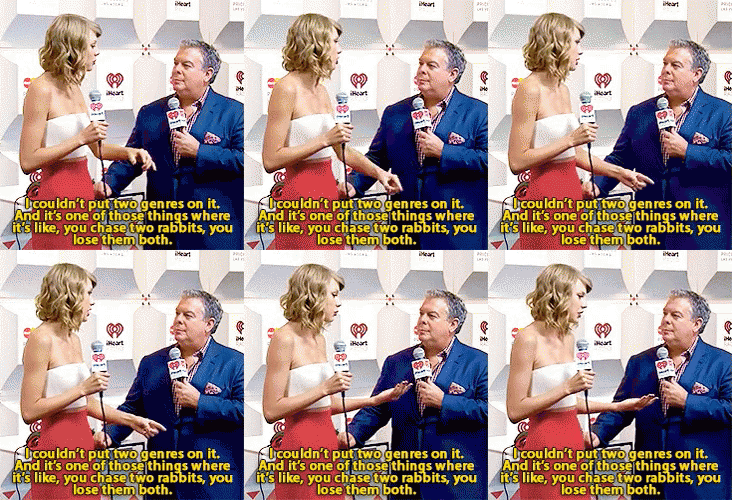
As she revealed in her iHeart acceptance speech, practicing music in isolation helped Taylor Swift shine, but following her footsteps in the current feedback-driven Internet culture is hardly possible. Social media threatens creative dreams and creativity per se: used as a compass, engagement metrics navigate the complex, lonely journey of becoming an artist to a shipwreck.
Similar to the need vs want clash, there is a contradiction between demand and supply on TikTok. As a viewer, I open my feed for a fast dopamine injection—and I react to what I see unconsciously: playing, laughing, or crying when I get bored. But as a creator, I treat TikTok rationally, using it to make myself visible in the current attention economy so people can interact with my craft.
(These hats switch easily, as I could post my carefully played piano video and go chill in the feed to see what others have done while I was busy editing my creation.)
Set aside the fact that most Gen Z today aim at becoming an influencer, there are still more viewers than creators on TikTok. So, the demand wins. And the dopamine-stimulated brains dictate clear expectations from the creators: produce something familiar, instant, novel, and slightly unpredictable to keep watching intriguing.
The better you meet these expectations, the more likely you are to become viral for a while.
In Dopamine Nation, Anna Lembke sees this mechanism as a clinical deviation and compares it to a slot machine. Similar to drug or alcohol addiction, we access social media for dopamine, and all we care about is soothing our pain caused by unhealthy consumption habits. Defined in these terms, creating for social media has nothing to do with building art that stands the test of time; that’s why, after millions of views on a video, only a handful of followers may stay around with a high-performing creator, and nobody recalls the top-performing content in a month (unless it becomes a trend melted in thousands of similar videos).
Competing for greater visibility is a hamster wheel, because pleasing the algorithm set for non-stop amusement strengthens mutual dependence between the hooked viewer and the hooked creator. Viewers train TikTok feed on the type of dopamine they prefer to consume to chill, and creators get their million-viewer dopamine shots by readily supplying this exact type of drug to their viewers.
It can be fun unless a creator assumes that the real (or possible) moment of fame is an ultimate goal, valid feedback, or a sign of what really matters to people. That’s how the creative journey stagnates: one experience of a million views creates the craving for another one, and this craving replaces the inner calling.
There is likely no harm in amusing others or using the platform to get amused. But the danger is that social engagement metrics hijack the quality standards, the originality of thought, and the ability to make something complex and unique—for viewers and creators alike.
It’s easier to repeat a high-performing TikTok format or replace personal opinion with socially pre-approved ideas from Threads, Goodreads, and Letterbox. But being constantly stimulated by these scripts, it’s almost unbearable to stand feeling stuck, screwed, or see your own uselessness and stupidity with eyes wide open.
Social media creates an illusion that a creative act is a fast and fun journey anyone can repeat. But each creator who tried self-expression knows: in reality, making worthy things means overcoming unbearable pain several times. In moments like these, well-trained discipline, a chill mindset, and overall stamina are more important than talent.
But if we lack these qualities (yet believe in our talent), cutting corners with a fast and approvable format is a decent painkiller.
(And I know it: I cannot count how many times I checked my socials while writing this essay to dissolve my futility in fast dopamine.)
But likability is good for social capital, not for evaluating the worthiness and depth of our creations. As Neil Postman argues,
[M]ost of our daily news is inert, consisting of information that gives us something to talk about but cannot lead to any meaningful action.
In modern culture, distraction replaces judgment, and our constant chase of appealing images and videos (though making them requires specific skills and dedicated effort) creates a preference for fast food over art on social media.
Applied to my beginner artist experience, I need to choose what to work on first: the algorithm or the craft. They are not rivals, but two separate priorities under two separate paths and milestones.
To become a successful pianist on TikTok, I should master hook layering, joke about piano-related situations, post the most popular and easy-to-digest melodies, and connect with other pianists regularly for at least 10-15 minutes.
But being a successful pianist offline means showing up every day for at least an hour (with a metronome as my only gadget), starting with boring warm-up exercises, and sitting for months with a single passage until the uncomfortable finger positions in advanced movements become automatic at any tempo and under any circumstances.
A TikTok creator has a weekly content calendar to stick to; an offline pianist shows up at a piano performance every several months with a concerto that requires a long attention span from viewers and complex preparation from a creator.
It takes time to master both roles, but adaptation doesn’t change their nature: online is about visibility; offline is about connection. Both have a price tag: visibility comes at the cost of overreliance on likability and fitting dopamine desire for the slot machine formats, and building connection is lonely, slow, painful, and may pass unnoticed.
That said, pursuing a creator career is a lose-lose game, but we still need to play it to live a happier life. So I hope that more people choose the right side of the game.
For the sake of playing it good, not necessarily loud.
Because it never stops fascinating me how in one hour I can learn a simple melody, record it, and receive dozens of likes and hundreds of views on socials. But I know that I won’t be able to perform any trick online if I pause practicing really hard things in my craft in silence.